


Description
WWII US Army Air Force (USAAF) pilot ID chains or bracelets were custom-made, unofficial identification jewelry heavily worn by flight crews. They typically featured a sterling silver or stainless steel ID plate – often soldered with pilot wings – engraved with the pilot’s name, serial number, and contact details. While pilots were issued standard metal dog tags (like the ones worn around the neck), ID chains were privately purchased from jewelers on or near military bases. Pilots and aircrew wore them as a backup identification method and a good-luck charm, ensuring their personal details were always accessible while flying in combat.
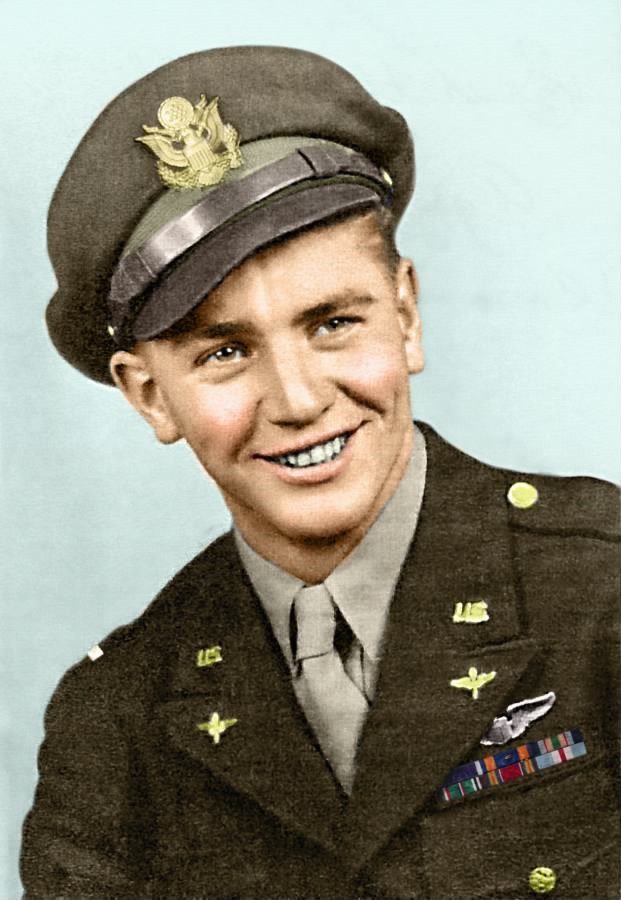
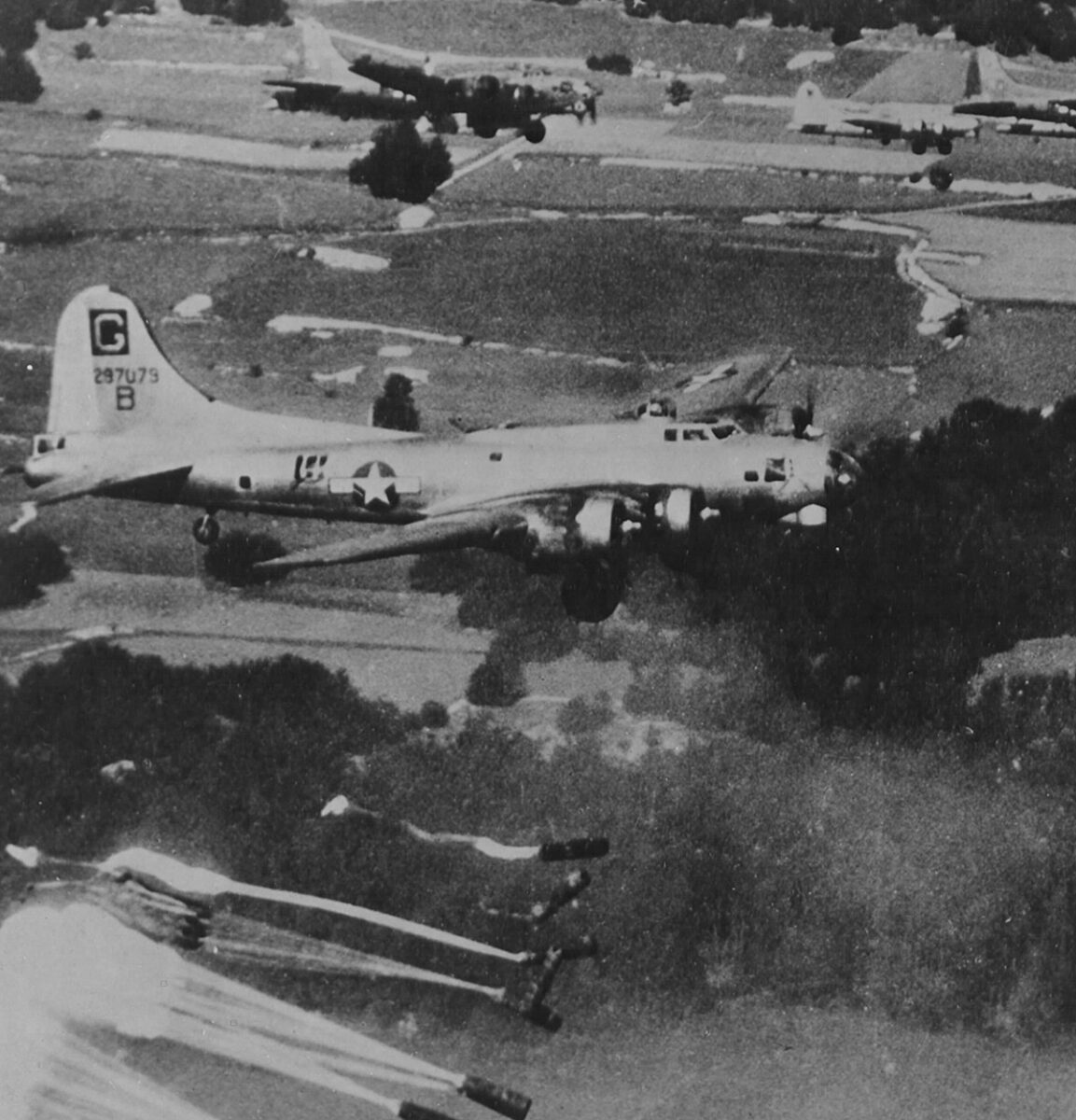
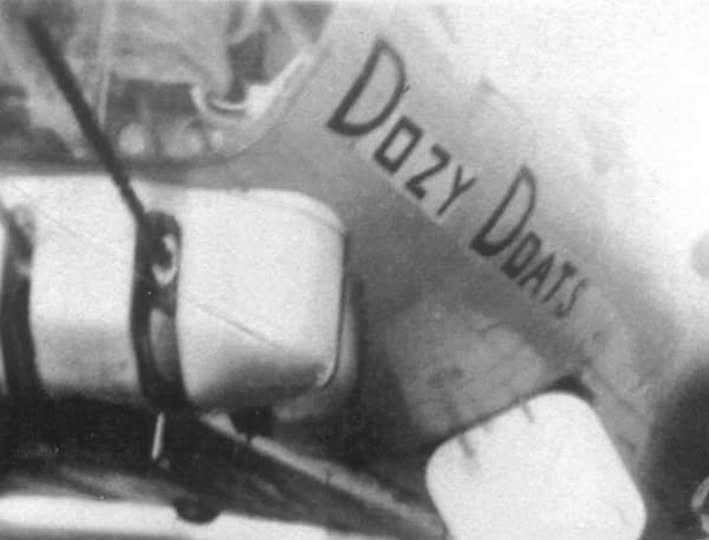
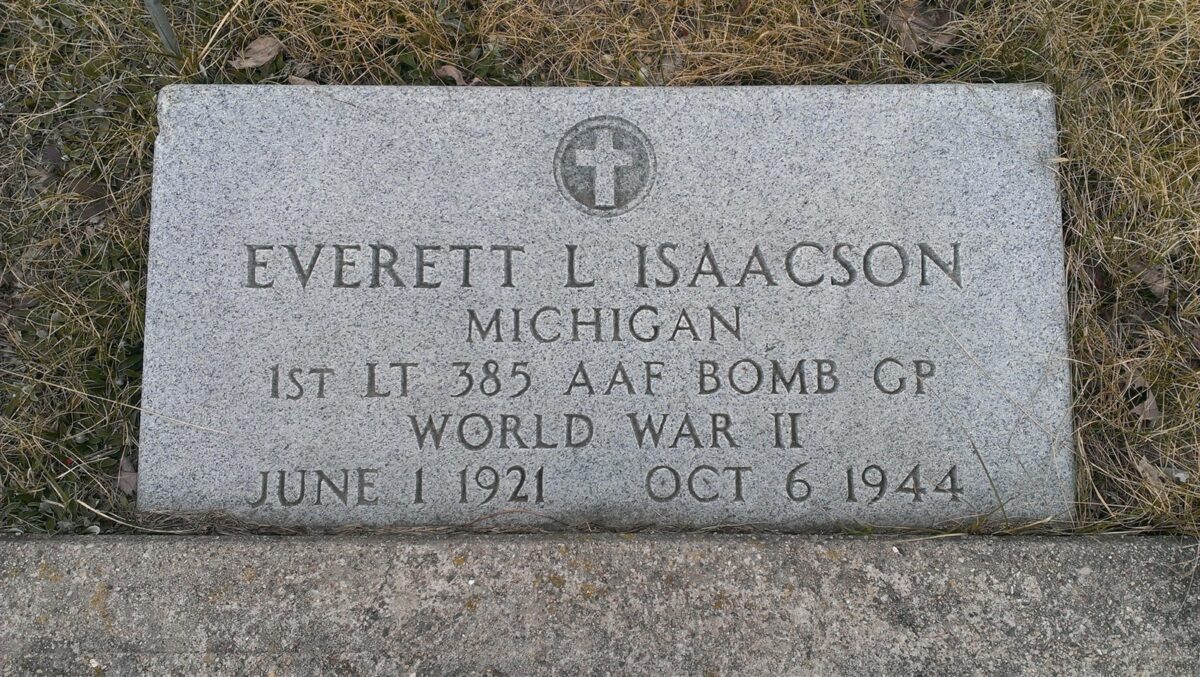
Everett L. Isaacson served as a Command Pilot with the 548th Bomb Squadron, 385th Bomb Group. On October 6, 1944, he was piloting B-17G serial number 42-97079, nicknamed “Dozy Doats,” during a mission to Berlin, Germany. After the aircraft was attacked by German fighters, Isaacson remained at the controls while ordering his crew to bail out. The aircraft subsequently exploded in mid-air and crashed near Brandenburg, Germany. Five crew members were killed, including Isaacson, while four survived and were taken prisoner. The loss of “Dozy Doats” occurred during a disastrous day for the squadron in which eleven aircraft were lost. Isaacson is buried in Republic Cemetery, Republic, Michigan. His older brother Waino Arthur Isaacson also served as a bomber pilot and was killed in 1943, with both brothers now buried side by side in their hometown.
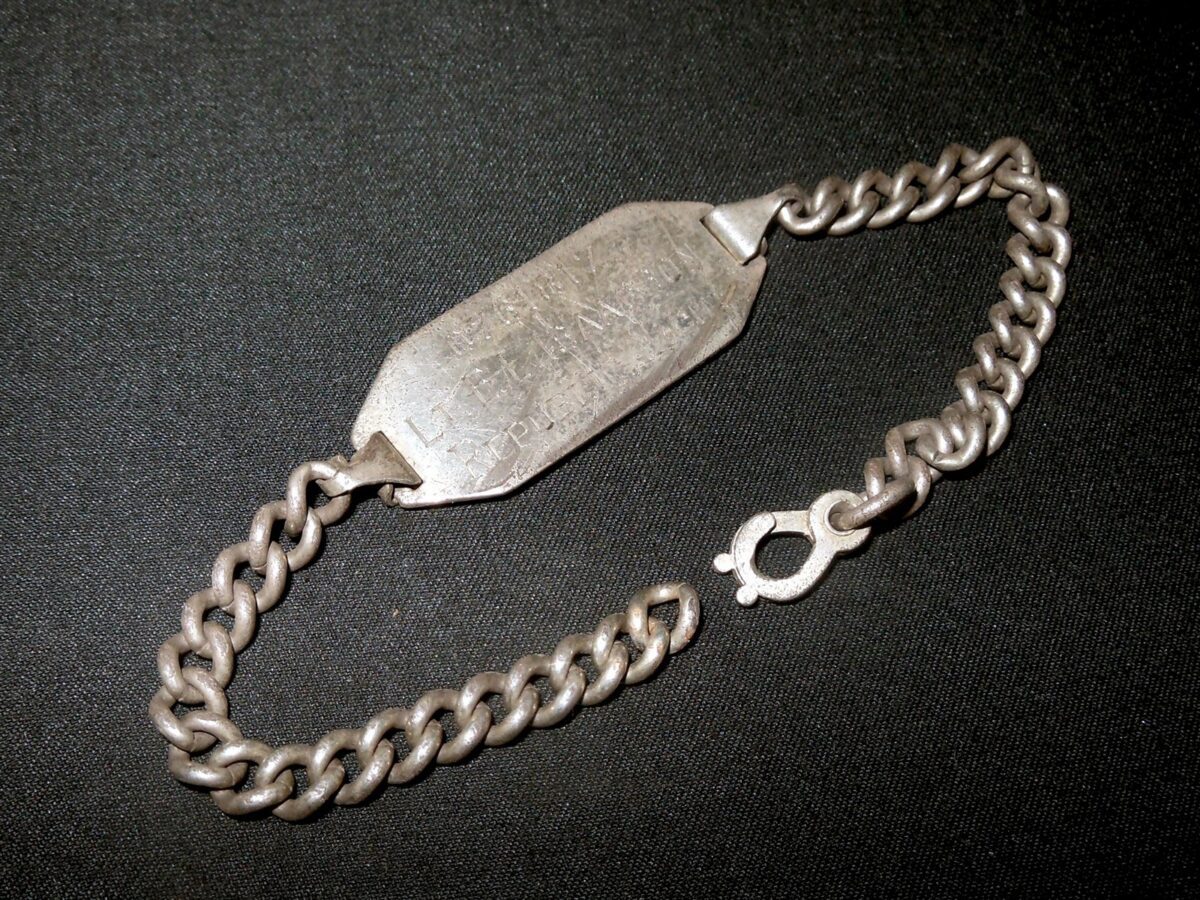
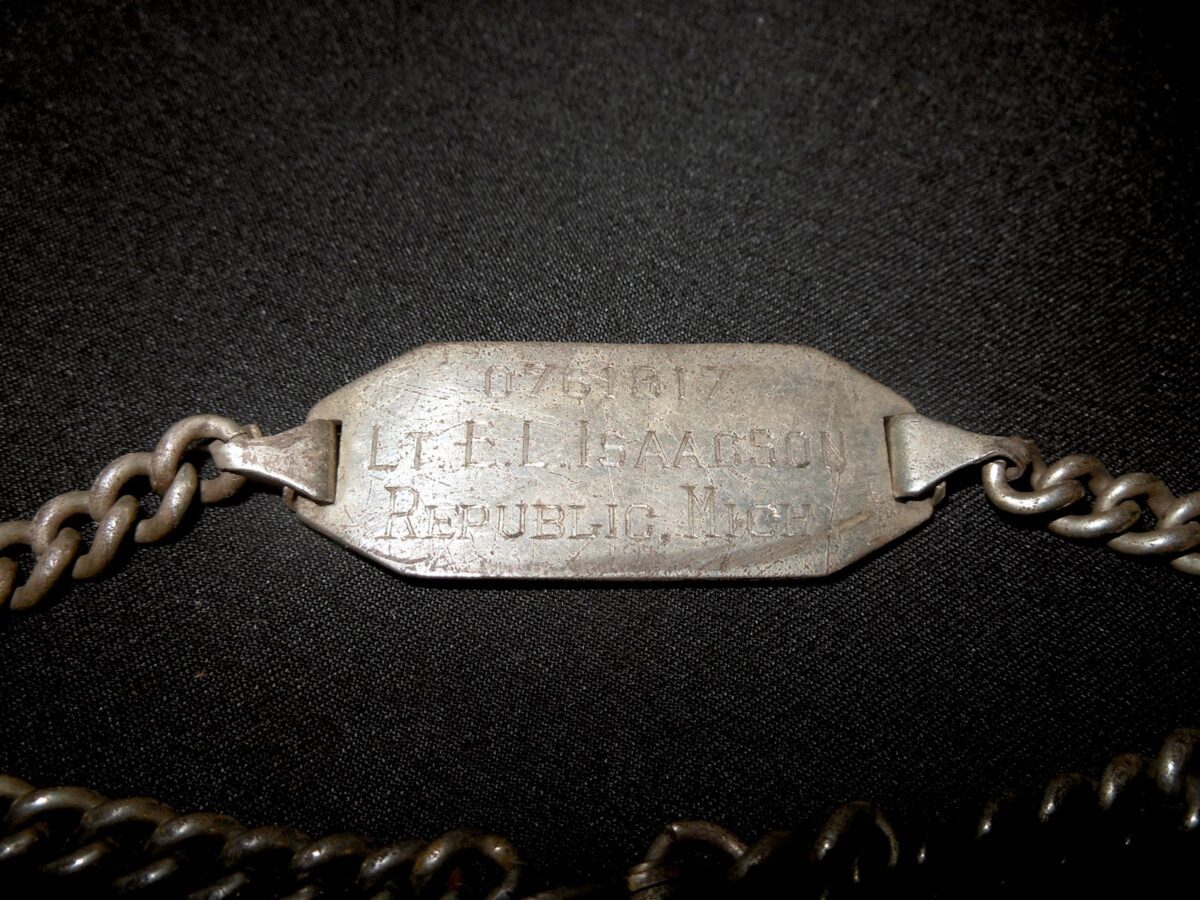
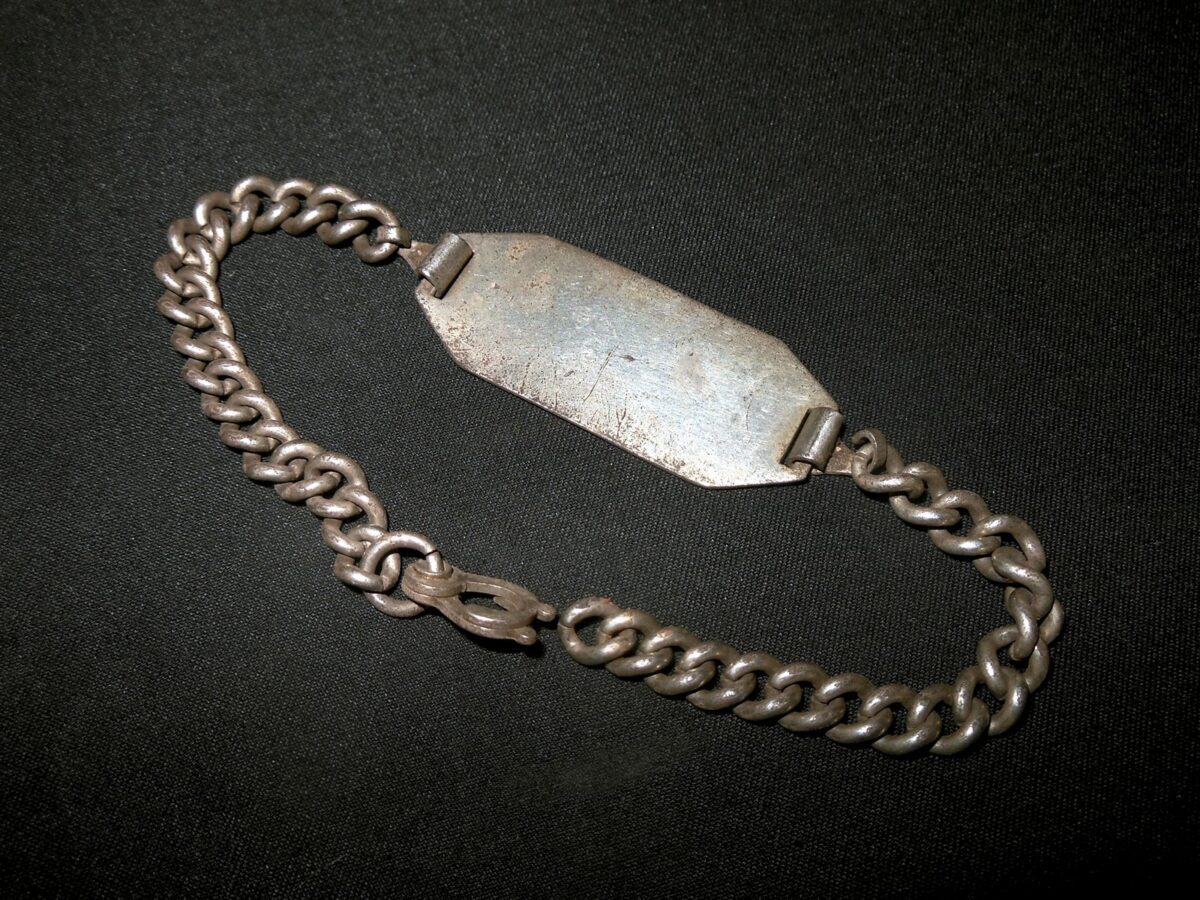
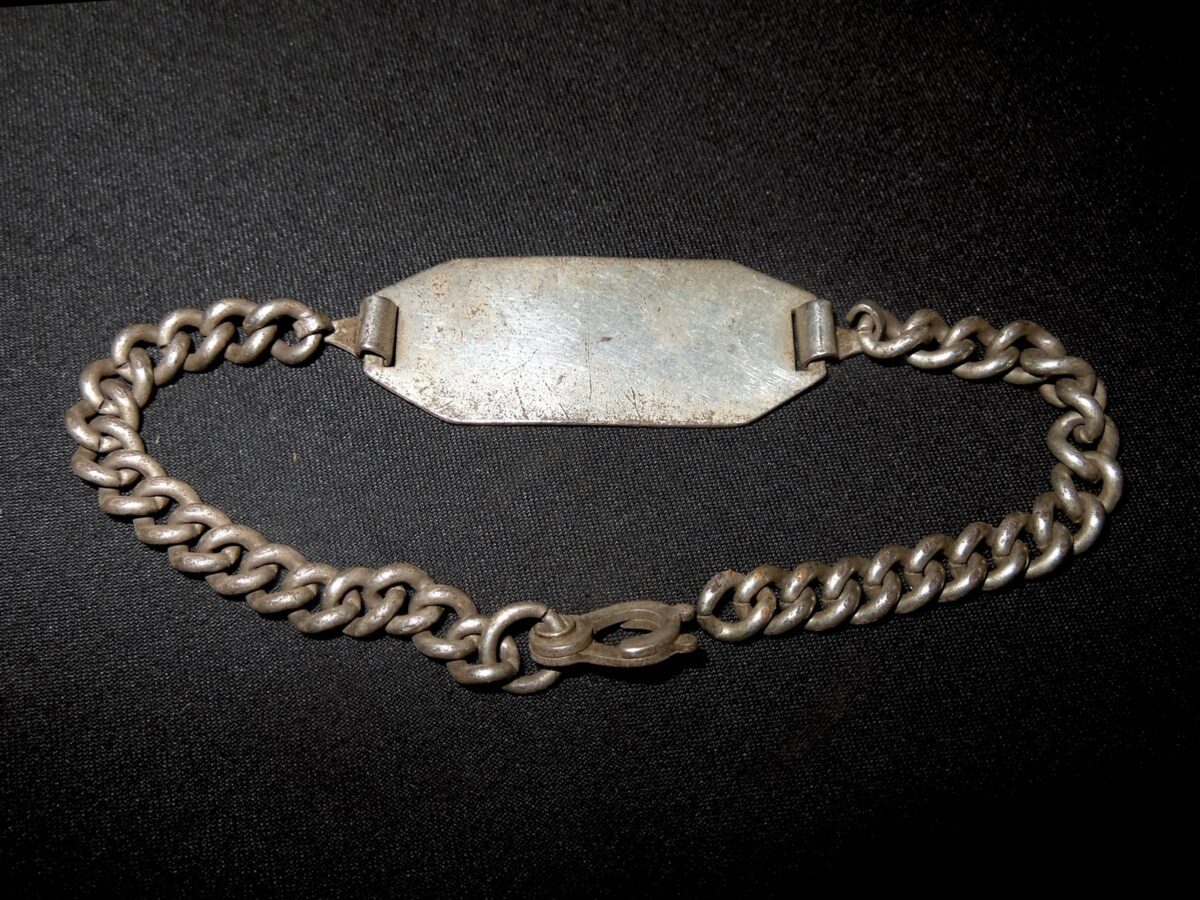
Made of sterling silver, the bracelet is engraved “LT. E. L. ISAACSON” along with his wartime serial number and remains fully legible. There are some slight marks and wear, due to the age, but nothing that detracts.The clasp functions correctly and the bracelet is complete. This ID was acquired in Germany and was previously displayed in a framed presentation containing research relating to Isaacson and the loss of “Dozy Doats“. The frame itself is not shown, but I can include it one wishes. The exact chain of custody following the aircraft’s loss is unknown. It is possible the bracelet was recovered from the crash site; retained by German authorities; recovered by one of the surviving crewmen who later became a prisoner of war; or preserved by collectors over the decades before eventually entering a German collection. Regardless of its exact path, this is a deeply personal artifact connected to a documented USAAF combat pilot who gave his life during a mission over Germany. An EXCELLENT research opportunity and historical display piece relating to the air war over Europe.


