
Description
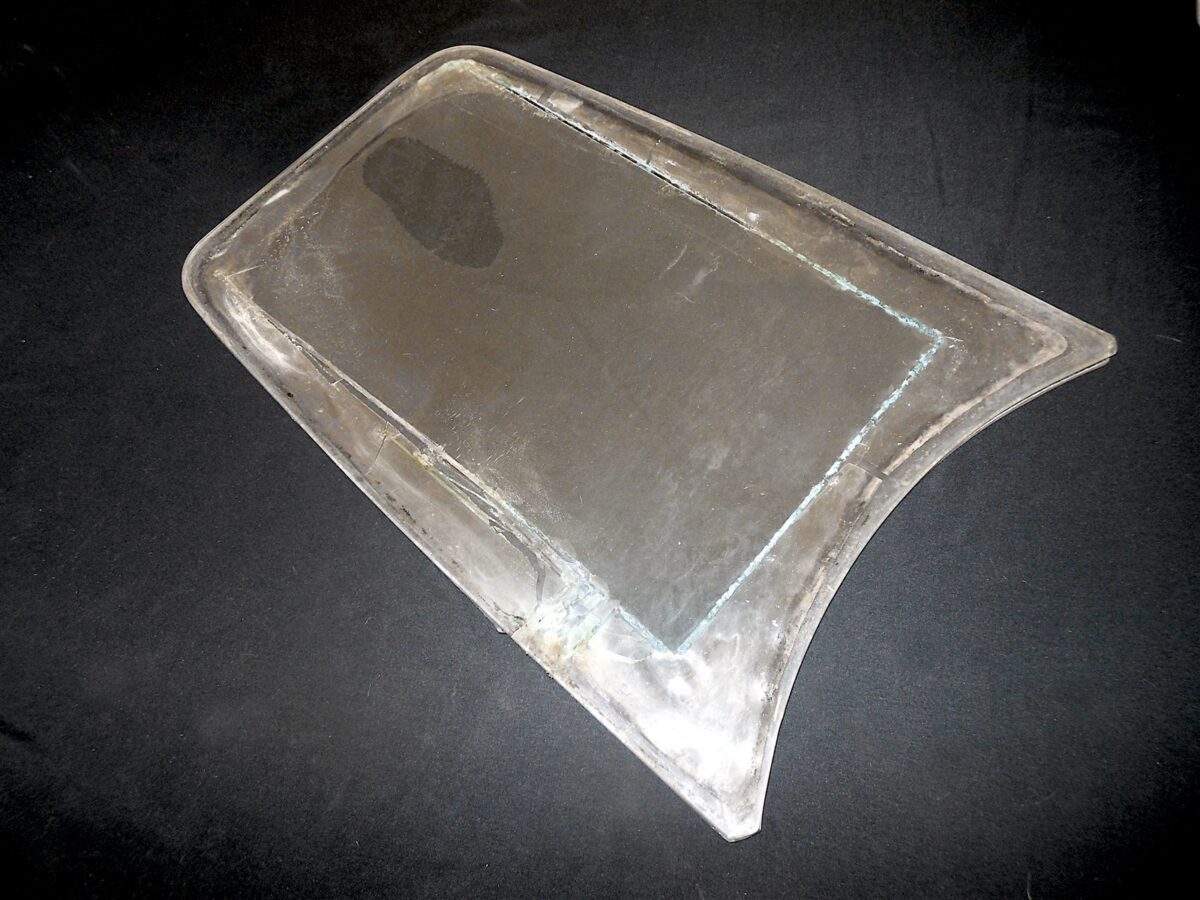
You are bidding on an EXTREMELY RARE and 100% ORIGINAL example of a WW2 German Luftwaffe Messerschmitt Me262 Electrically Heated Front Pilot Windscreen Plexi (262.113-001.003). This is the forward glazing panel positioned directly in front of the pilot on the Me262 cockpit windshield assembly and was used on all variants!
The Messerschmitt Me 262, nicknamed Schwalbe (German for “Swallow”) in fighter versions, or Sturmvogel (“Storm Bird”) in fighter-bomber versions, is a fighter aircraft and fighter-bomber that was designed and produced by the German aircraft manufacturer Messerschmitt. It was the world’s first operational jet-powered fighter aircraft and one of two jet fighter aircraft types to see air-to-air combat in World War II, the other being the Heinkel He 162. The design of what would become the Me262 started in April 1939, before World War II. It made its maiden flight on 18 April 1941 with a piston engine, and its first jet-powered flight on 18 July 1942.
One of the most advanced World War II combat aircraft, the Me262 operated as a light bomber, reconnaissance aircraft, and experimental night fighter. Ultimately, the .
The Me262 heated pane consisted of laminated glazing incorporating a fine electrical resistance grid between the layers. When energized by the aircraft electrical system, the embedded grid heated the principal viewing area of the windscreen to prevent or remove ice and mist. A surviving original example held by the Czech Military Historical Institute is described as approximately 7 mm thick, with the heating grid concentrated across the upper two-thirds of the pane where the pilot’s line of sight was most critical. The Me262 also incorporated an alcohol washing/de-icing system around the windshield assembly, providing an additional means of keeping the glazing clear during flight.
Made of laminated transparent glass and plexiglass, with the original fine-wire electrical heating element sealed internally, this EXTREMELY RARE original Me262 windscreen panel! In EXCELLENT display condition, the laminated construction remains clearly visible around the edges, along with the embedded electrical resistance wiring. The original electrical terminal area remains present, though the terminal is bent and corroded and one of the small projecting electrical leads appears to be broken. As there is some separation between the two panels, moisture has entered between the laminated layers over time, resulting in some edge delamination, localized bubbling and substantial blue-green copper oxidation around portions of the internal heating element. There is also some cloudiness, yellowing, scratches and general surface wear from age and storage, however the principal viewing area remains surprisingly clear and the panel can still be seen through easily. The heating system is damaged, untested and absolutely NOT suitable for operational aircraft use; this is being offered solely as an original historic display artifact. No visible manufacturer stamps or additional markings are present, however it is identified directly in the original Me262 Ersatzteil-Liste under Baugruppe 262.113 – Kabinenaufbau as part 262.113-001.003. I have shown its location in the last images. This is an EXCEPTIONALLY difficult original component from one of the most technologically significant combat aircraft of WW2…PERFECT for any Me262, Luftwaffe, German aviation, jet aircraft or WW2 collection or display!


